Pages

Thursday, 28 November 2013

Tumblr & Happiness & The West Wing & De-Stressing

This weekend, I will explain the many ways autism has effected this week of my life and the discrimination I've had to deal with in the last few days.  

But for now, I'm trying to be calm and happy.  I have an exam tomorrow that I am trying my best to study for.  

I love this tumblr site and it was recently updated!  It is called "Little West Wing Things" and it is for fans of the amazing show The West Wing and basically posts little quotations or concepts from the show that make me (and other West Wing lovers) happy.  

 Submitted by fangirl-squee Submitted by mbaldi
 Submitted by minalover 

Those were some recent additions to the site that made me smile.  

If you're a West Wing fan, you'll probably like this tumblr.  

If you're not a West Wing fan, you probably should be.  The show celebrates smart individuals and smart dialogue.  The show tackles complicated and multi-faceted issues.  I love it.  When I'm having a bad day, The West Wing is often my solace, and since I can't spare 44 minutes to watch an episode tonight, this tumblr is giving me a good few minutes of joy.  

Monday, 25 November 2013

I Hate Sad People

Sometimes people are sad.


I have never been comfortable around sad people because I don't know how to respond to them.


Sad people make me uncomfortable and anxious.  I just don't know how to react around them.  I shut down.  And there are people who turn to me for comfort, but I just don't know *how* to comfort them.  


I fully recognize that I am "bad at sad."  But I really stress when I'm expected to be comforting and I am simply incapable of it.  These are the moments I feel the most Autistic (in a bad way).  These are the moments I struggle the most to feel comfortable with myself and feel like an adequate person to those who love me.  I sometimes feel so incompetent in relationships.  And when people are sad, I tend to feel worse about myself.

Sunday, 24 November 2013

What Are "Meltdowns"?

The best answer I've ever heard to this question is from autisticdrift on tumblr (their tumblr is linked here).  Autisticdrift responded:

It’s different for everyone. Some people withdraw and get very quiet. Others appear to be really angry (throwing or hitting things, yelling, cursing). Others seem very sad/distressed (crying, sobbing, not talking or seeming inconsolable). Some people try to “disappear” by making themselves small, covering themselves with blankets or wedging themselves into a small hiding place. 
I don’t think there is a typical response across all people but I do think that each person has a response that is typical of them, if that makes sense.

For me, meltdowns start LOUD and ANGRY, with crying, yelling, throwing, and hitting.  Meltdowns are an out-of-body experience and I honestly don't comprehend myself or the situation when I'm having one.  I know I scream and cry and wail because I've seen it on video tape (my parents used to tape them when I was a kid because they didn't understand them and wanted to show my doctors) but I honestly have little recollection afterward.  I cry and I scream and I throw and then I shrink down into a tiny little quiet shell of myself.  I try to hide and make myself invisible.  

That is the progression of every meltdown I have ever had from early childhood until now.  

Meltdowns are a really unique experience and something that neurotypical individuals cannot usually understand.  

The most important thing I want to get across, though, is that meltdowns are not temper-tantrums.  Meltdowns are different.  Meltdowns are a response instigated by our unique neurochemistry.  They are not voluntary.  

When I am having a meltdown, I am not really there.  

Friday, 22 November 2013

Can Autistic Parents Be Good Parents?

An Autistic woman not much older than me is in the process of losing custody of her second child.  There are a lot of factors behind the fight, but the one that everyone seems to be focusing on is the fact that she has autism.  People have decided, apparently, that individuals with autism can't be good parents.  I've heard that so much recently and I'm very upset about it.  I've been struggling with how to discuss this concept in a blog post, but here goes:

Autistics are people.

It is true that our brains are different than neurotypical brains.  It is true that we often do things differently than neurotypical people.  It is true that we might be quirky or need more help with certain tasks than others.  But it does not make us less than human.

There are lots of Autistics who don't want kids.  There are lots of Autistics who don't like kids.  But there are lots of people in those categories too.  It is true that some Autistics may need more support and teaching when it comes to parenting, but it is not true or right or even remotely okay to blanket that in the completely untrue fact that "All Autistics would make / do make bad parents."

There are lots of neurotypical individuals out there who are bad parents too, but we don't hear about them, or when we do, we don't focus on their labels.  When it is an Autistic individual (who does anything!), the first thing people report is that that person is Autistic.  And that's where the focus remains.  Autism has all sorts of negative connotations because anything an Autistic individual does presented as something they did because of their neurochemistry.

I do not have any children yet.

Yet.

I want children.  I have always wanted children.  For a long time I didn't think I'd be able to have children because I struggle so much in relationships (with anyone) that I never expected to have a romantic partner or a support system in place, but I've miraculously been blessed with both.  Everyone close to me knows that I'm Autistic.  And sure, I do some weird things and they "blame it on the autism," but we all do weird things, mine just be a bit more noticeable at times.

That doesn't mean I'll be a bad parent.

I can't wait to be a parent and I have felt that way since I was a child myself.  I've always loved kids and am excited to one day have my own.

I think I'll be an excellent parent.

Thursday, 21 November 2013

Kourtney Kardashian and Khloe Kardashian said the R-Word

A few days ago, I mentioned that I'd seen an episode of Keeping Up With The Kardashians in which Khloe Kardashian said the r-word.  I blogged about it here on November 19th.

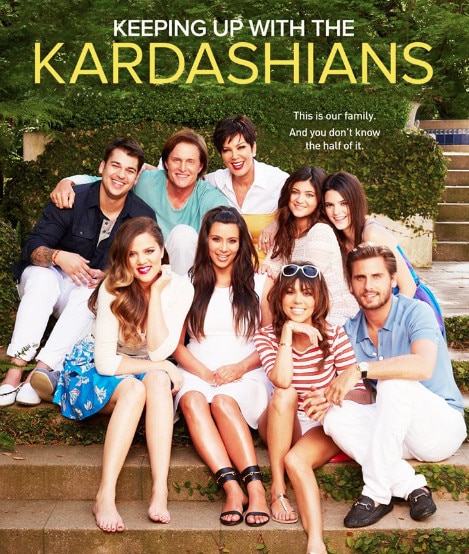
Keeping Up With The Kardashians is an American reality show about a large blended family whose members are (mostly) famous for being famous.


In the bottom row of this picture the right hand side, is Scott and, next to him, Kourtney.  Kourtney is the eldest Kardashian daughter and Scott is her partner.  Neither one is particularly appealing to me nor have I ever found them particularly appealing, but I found a new dislike in both when I watched the ninth episode of the fourth season and heard Kourtney use the r-word.

The context: Kris (Kourtney's mother) was complaining about Scott's poor work ethic and immaturity.  Kourtney, in what I think was an effort to defend him, said: "He's not r------d."

Then, a few minutes further into the episode, Khloe (she's the one on the far left on the bottom row, the third-born Kardashian daughter) says the r-word.

The context: Kris (Khloe's mother) tells Khloe she has to come to a function even though Khloe's husband is injured and she wants to be with him.  Khloe angrily responds: "I'm not r------d."

That language is inappropriate - ALWAYS - and I am offended that the Kardashians (public figurse who I believe some people must look up to) are using that language so casually and showing people that this is acceptable behavior.

The truth is that the r-word is EXTREMELY OFFENSIVE to a lot of individuals - particularly those with developmental disabilities - and it is absolutely inappropriate to use the term derogatorily because it implies that those individuals with special needs are worth less than their typically developing counterparts.

I'm sure the Kardashians didn't consider any of this before theyspoke.  But I think theyought to, especially since they might be looked to as role modesl.

We do have to "spread the word to end the word" and there is so much work to be done.

Wednesday, 20 November 2013

Special Needs Community Resources

Do you know what's weird to me?  There are so many community supports for children with special needs but so few for adults who require those same services.  In so many places, when you turn 18 you become ineligible for so many programs that are so essential for so many individuals.  That's so unfortunate.  It seriously makes me sad.

There are conditions that people put a lot of research money in to and conditions that people really pity in kids.  Those kids get a lot of donations and services in the community.  Those kids' lives are made better and easier by people who work hard to give them opportunities to reach their full potential.  But when they're 18, why should those services suddenly stop?  Why do so many organizations stop investing in people once they reach that magical threshold age?

I don't access any community supports right now.  Last year, I did access a few supports, mostly through my university campus's disability resource center, where one of the staff members was very helpful with guiding me to what I was looking for.  Before university, I attended all sorts of programs and groups as well as various therapies.  I now that I've reached my early twenties, I'm too old to qualify for most of them anymore.

But being "an adult" doesn't mean that someone is done needing help.  I know a lot of people who are much older than me but who rely on private services to help them in their day-to-day life.

Adults matter, too.

I think we all know that.  I don't think that's a groundbreaking statement.  But I do think it's important to recognize that a lot of places really do leave young adults stranded in terms of resources when they "age out" of programming.

Of course I see the value of helping kids, but what makes adults any less valuable?

In typically-developing culture, adulthood is seen as this magical time when individuals no longer need the support and nurturing they received as children because they are supposed to be fully independent.  However, for individuals with special needs -- including Autistics -- that often isn't the case.  As much as I would like to say I am fully independent, I know this is a lie.  I have so many people around me who help me with the little things I cannot do, and this is the case for most Autistic young adults I know as well.

One day I want to "grow up" to a point where I no longer need people to translate the world for me, remind me to eat, and make my house safe.  But I'm not quite there yet.  And a lot of people need more support than me.


So, I wonder, why does the availability of community resources decrease so drastically once one reaches "adulthood"?

Tuesday, 19 November 2013

Khloe Kardashian said the R-Word

I'm not a reality TV person.  Actually, I despise reality TV.  But I love my best friend and she wanted to hang out with me and wanted to watch a show called Keeping Up With The Kardashians.  I'd never seen the show before, but now I've seen a few episodes.

Essentially, it is a reality show that follows the lives of a very privileged blended family in the United States.  The family members are not particularly likable nor do they seem particularly intelligent, but the show certainly has its share of followers.  I've mentioned it to a few people recently and apparently it is quite popular; it seems like all of my close friends have seen at least one episode.

From what I can tell, the show focuses on the family's eldest three daughters whose names are adorably alliteration-y: Kourtney is the oldest, Kim is in the middle, and the youngest is named Khloe.  Everyone I've spoken to has a "favorite" of the three.  In the first few episodes I saw, my favorite was Khloe.

I was disheartened and offended when -- in the first episode of the the third season of the show -- Khloe casually used the r-word to describe someone she didn't like.  I thought that was just terrible. This is horribly offensive to a ton of people.  And since these women are influential public figures and many impressionable individuals watch this show and see these women as role models, I really worry that this sets a horrible example.

I don't think that word should be allowed on television.  It is not a nice word.  And even though there are so many people who understand and believe this, it is equally true that there are a lot of people who don't yet understand what is wrong with the r-word, and I think it is our job to educate them and set a good example.