An Autistic woman not much older than me is in the process of losing custody of her second child. There are a lot of factors behind the fight, but the one that everyone seems to be focusing on is the fact that she has autism. People have decided, apparently, that individuals with autism can't be good parents. I've heard that so much recently and I'm very upset about it. I've been struggling with how to discuss this concept in a blog post, but here goes:
Autistics are people.
It is true that our brains are different than neurotypical brains. It is true that we often do things differently than neurotypical people. It is true that we might be quirky or need more help with certain tasks than others. But it does not make us less than human.
There are lots of Autistics who don't want kids. There are lots of Autistics who don't like kids. But there are lots of people in those categories too. It is true that some Autistics may need more support and teaching when it comes to parenting, but it is not true or right or even remotely okay to blanket that in the completely untrue fact that "All Autistics would make / do make bad parents."
There are lots of neurotypical individuals out there who are bad parents too, but we don't hear about them, or when we do, we don't focus on their labels. When it is an Autistic individual (who does anything!), the first thing people report is that that person is Autistic. And that's where the focus remains. Autism has all sorts of negative connotations because anything an Autistic individual does presented as something they did because of their neurochemistry.
I do not have any children yet.
Yet.
I want children. I have always wanted children. For a long time I didn't think I'd be able to have children because I struggle so much in relationships (with anyone) that I never expected to have a romantic partner or a support system in place, but I've miraculously been blessed with both. Everyone close to me knows that I'm Autistic. And sure, I do some weird things and they "blame it on the autism," but we all do weird things, mine just be a bit more noticeable at times.
That doesn't mean I'll be a bad parent.
I can't wait to be a parent and I have felt that way since I was a child myself. I've always loved kids and am excited to one day have my own.
I think I'll be an excellent parent.
Showing posts with label misconceptions. Show all posts
Showing posts with label misconceptions. Show all posts
Friday, 22 November 2013

Thursday, 15 August 2013
I Will Vaccinate My Children
I will vaccinate my children. I will do this because I want my children to be healthy. I will do this because I want my children to stay alive.

Vaccines don't cause autism, and yet there are so many people out there that have bought into this myth and that's incredibly frightening to me. Suddenly, now many kids are getting these illnesses that were unheard of ten years ago. Suddenly, kids who are immunosuppressed are at risk around the increasing number of their unvaccinated peers.
This is a great quotation from Johanna Holmes on this pro-vaccination website.
Vaccines don't cause autism, and yet there are so many people out there that have bought into this myth and that's incredibly frightening to me. Suddenly, now many kids are getting these illnesses that were unheard of ten years ago. Suddenly, kids who are immunosuppressed are at risk around the increasing number of their unvaccinated peers.
This is a great quotation from Johanna Holmes on this pro-vaccination website.
"Indeed, there are few choices in the field of parenting that have stronger, clearer-cut evidence in support of them. Other parenting decisions are burdened by conflicting recommendations and may vary in different communities with different traditions. There is no such conflict of professional opinion regarding the science of immunization. Every single major medical and public health organization worldwide stands in unanimous agreement regarding the science and value of routine immunization. In the case of such clear scientific consensus, ambivalence seems driven more by fear than by fact.
"To my fellow parents who choose mindfulness, I tell you that you are correct: the small choices that you make do matter. They matter a great deal, but perhaps not in the way that many in the mindful parenting community believe they do. A three-month delay on an immunization may feel safer, but this delay is not the difference between a developmental disorder and normal development. It may, however, be the difference between pertussis and no pertussis. Measles or no measles. Hib meningitis or no Hib meningitis. This we know."
Of course vaccines have risks. Some people can't get certain vaccines due to allergies, for example. Some vaccines can cause nasty side effects. But I really hate it when people choose not to protect their children or themselves simply due to ignorance. I hate it when people choose not to vaccinate out of fear. Johanna Holmes even discusses this in her article; she says:
"Small choices, done and undone, make all the difference in the world. By all means, ask questions regarding immunization safety. Educate yourself, immerse yourself in the science, the evidence, the documented risks of immunizations and of the diseases themselves. You owe it to yourself and to your children to ask the hard questions."
Autism is not the end of the world. Having an autistic child is not the end of the world. But I will accept if that's frightening to some people. I know the parents who choose not to vaccinate because they're afraid of autism have a very real fear, be it justified or not. Not all parents want autistic kids, and that's fine, I guess. But I'd argue that all parents want healthy kids. So vaccinate your children. Keep your children healthy.
Friday, 26 July 2013
Jenny McCarthy & Crap People Say About Autism
I don't watch The View. I'm not in their target audience.
But I recently learned that Jenny McCarthy is going to be a host on the show. That's concerning because -- even though I'm sure Jenny McCarthy has an actual career in which she does actual things, all I have ever heard about her is that she staunchly believes that autism is caused by vaccinations.
This article -- appropriately titled "Jenny McCarthy's Pseudoscience Has No Place on The View" -- explains the conundrum many of us in the autism community are facing right now.
Basically, McCarthy's son was diagnosed with autism. She believed it was caused by childhood vaccinations. She's now an outspoken "advocate" about how her son has been "cured." You can read all about that here.
In truth, there is absolutely no evidence that vaccines -- or anything, really -- "cause" autism. Autism is just a thing that happens. In fact, the myth that autism is caused by vaccines was deemed an "elaborate fraud" by researchers. And yet, this is a myth that is still perpetuated by people like McCarthy, even to this day!
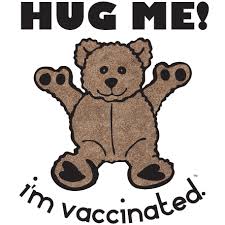
Spreading pseudoscience to an uneducated population is incredibly dangerous. This particular brand of pseudoscience is particularly frightening because 1) Vaccines are incredibly important; and 2) This "education" about autism breeds nothing but intolerance toward Autistic individuals and perpetuates the notion that autism is something that needs to be "cured" or eliminated all together.
I hope The View doesn't let Ms McCarthy discuss this subject on national television.
But I recently learned that Jenny McCarthy is going to be a host on the show. That's concerning because -- even though I'm sure Jenny McCarthy has an actual career in which she does actual things, all I have ever heard about her is that she staunchly believes that autism is caused by vaccinations.
This article -- appropriately titled "Jenny McCarthy's Pseudoscience Has No Place on The View" -- explains the conundrum many of us in the autism community are facing right now.
Basically, McCarthy's son was diagnosed with autism. She believed it was caused by childhood vaccinations. She's now an outspoken "advocate" about how her son has been "cured." You can read all about that here.
In truth, there is absolutely no evidence that vaccines -- or anything, really -- "cause" autism. Autism is just a thing that happens. In fact, the myth that autism is caused by vaccines was deemed an "elaborate fraud" by researchers. And yet, this is a myth that is still perpetuated by people like McCarthy, even to this day!
Spreading pseudoscience to an uneducated population is incredibly dangerous. This particular brand of pseudoscience is particularly frightening because 1) Vaccines are incredibly important; and 2) This "education" about autism breeds nothing but intolerance toward Autistic individuals and perpetuates the notion that autism is something that needs to be "cured" or eliminated all together.
I hope The View doesn't let Ms McCarthy discuss this subject on national television.
Monday, 1 April 2013
Educating People About Autism
I find it hateful when people state untrue facts about autism.
I find it hateful when people spew fallacies about the etiology of autism.
I find it hateful when people talk about "curing" autism.
I find it hateful when people say disrespectful things about Autistics.
Sometimes, it feels like there are two camps of people: those who think autism is a terrible thing and those who appreciate it as an amazing gift. The first category of people, people who tend to act hatefully towards Autistics like myself, are oftentimes the people who spread false statements and create fear in the hearts and minds of people who don't know anything about autism.
Language around autism is such a convoluted mine-field and not something I feel comfortable discussing. The dialogue among Autistics and allies and families and professionals is one thing. When those ignorant to autism join the conversation, things become even more complicated.
What I do know is that these conversations are important. We need to talk about autism. And we need to invite all people to the conversation. Everyone's beliefs and opinions will be different, but that is all right. We need to share our knowledge. Autistics need to speak. Friends and families of Autistics need to speak. The professionals who work with Autistics need to speak. Everyone needs to be involved in the discussion.
It is really important that autism stop being the proverbial "elephant in the room" and become something we are comfortable talking about. Because nothing is going to change unless we step up and share our expertise. People will state untrue facts, people will spew fallacies, people will talk about "cures," and people will be disrespectful. People will do all these things because they don't know any better. It is our responsibility to impart our wisdom to these people so that there is less hate directed toward our community.
I find it hateful when people spew fallacies about the etiology of autism.
I find it hateful when people talk about "curing" autism.
I find it hateful when people say disrespectful things about Autistics.
Sometimes, it feels like there are two camps of people: those who think autism is a terrible thing and those who appreciate it as an amazing gift. The first category of people, people who tend to act hatefully towards Autistics like myself, are oftentimes the people who spread false statements and create fear in the hearts and minds of people who don't know anything about autism.
Language around autism is such a convoluted mine-field and not something I feel comfortable discussing. The dialogue among Autistics and allies and families and professionals is one thing. When those ignorant to autism join the conversation, things become even more complicated.
What I do know is that these conversations are important. We need to talk about autism. And we need to invite all people to the conversation. Everyone's beliefs and opinions will be different, but that is all right. We need to share our knowledge. Autistics need to speak. Friends and families of Autistics need to speak. The professionals who work with Autistics need to speak. Everyone needs to be involved in the discussion.
It is really important that autism stop being the proverbial "elephant in the room" and become something we are comfortable talking about. Because nothing is going to change unless we step up and share our expertise. People will state untrue facts, people will spew fallacies, people will talk about "cures," and people will be disrespectful. People will do all these things because they don't know any better. It is our responsibility to impart our wisdom to these people so that there is less hate directed toward our community.
Friday, 11 January 2013
When Autistics Communicate & Understand Language
I am verbal. I have always been verbal. I started speaking before I was one year old and I always enjoyed talking. I always had a sophisticated vocabulary -- it was more pronounced when I was young because I'd use multi-syllabic words that no other preschoolers understood -- and I always liked to show it off. However, sometimes, I did not enjoy talking.
When I am anxious or when I am having a "bad brain day," I sign (in ASL). I understand people much better when they can sign to me as well as speak, because the two sources of information are the best way for me to process instructions. Neurotypicals have told me it's "weird." But a lot of my fellow autistics -- if you're out there somewhere -- maybe you know what I mean.
I cannot watch television without subtitles. This does not mean that I turn the volume off -- no, instead I watch with the verbal dialogue supplemented by subtitles at the bottom of the screen. I cannot understand television without subtitles. I can hear and I can comprehend the words, but but only after hearing and seeing a show can I explain what it was about. My brother used to hate this when I was younger and I monopolized the TV. I'd always complain I couldn't understand the show properly when he'd switch the subtitles off.
I type incredibly quickly. That is both a subjective argument and something I have been told many times. I type most conversations out before I have them and I script all my phone calls. And when I type, I organize my thoughts much better than when I try to explain things with my words. Sometimes, when I'm having a bad day, instead of explaining it to my friends or my mother, I'll send a quick email.
I guess my point here is that there is a misconception in the world that autistic people either speak constantly or do not speak at all. There's this conception that being autistic means you're one or the other - you're "low functioning" or "high functioning" (just FYI I absolutely hate those terms) - when in fact, every autistic person is different and there is no "low-" or high-" functioning. I've met a lot of autistic people in my life and I know that we all have different strengths and weaknesses. For some people, communication isn't a strength. Some people augment verbal communication with other types of communication. Some people choose not to communicate verbally at all.
And that's OK. There has been so much progress in the neurotypical community when it comes to understanding autistics and what makes us unique, but more work needs to be done. Some autistics communicate like neurotypicals, some autistics communicate differently, and some autistics communicate in a way that encompasses both these choices.
And no matter how you choose to communicate -- via signing or typing or speaking or gesturing or just by behavior -- that's OK.
When I am anxious or when I am having a "bad brain day," I sign (in ASL). I understand people much better when they can sign to me as well as speak, because the two sources of information are the best way for me to process instructions. Neurotypicals have told me it's "weird." But a lot of my fellow autistics -- if you're out there somewhere -- maybe you know what I mean.
I cannot watch television without subtitles. This does not mean that I turn the volume off -- no, instead I watch with the verbal dialogue supplemented by subtitles at the bottom of the screen. I cannot understand television without subtitles. I can hear and I can comprehend the words, but but only after hearing and seeing a show can I explain what it was about. My brother used to hate this when I was younger and I monopolized the TV. I'd always complain I couldn't understand the show properly when he'd switch the subtitles off.
I type incredibly quickly. That is both a subjective argument and something I have been told many times. I type most conversations out before I have them and I script all my phone calls. And when I type, I organize my thoughts much better than when I try to explain things with my words. Sometimes, when I'm having a bad day, instead of explaining it to my friends or my mother, I'll send a quick email.
I guess my point here is that there is a misconception in the world that autistic people either speak constantly or do not speak at all. There's this conception that being autistic means you're one or the other - you're "low functioning" or "high functioning" (just FYI I absolutely hate those terms) - when in fact, every autistic person is different and there is no "low-" or high-" functioning. I've met a lot of autistic people in my life and I know that we all have different strengths and weaknesses. For some people, communication isn't a strength. Some people augment verbal communication with other types of communication. Some people choose not to communicate verbally at all.
And that's OK. There has been so much progress in the neurotypical community when it comes to understanding autistics and what makes us unique, but more work needs to be done. Some autistics communicate like neurotypicals, some autistics communicate differently, and some autistics communicate in a way that encompasses both these choices.
And no matter how you choose to communicate -- via signing or typing or speaking or gesturing or just by behavior -- that's OK.
Subscribe to:
Posts (Atom)